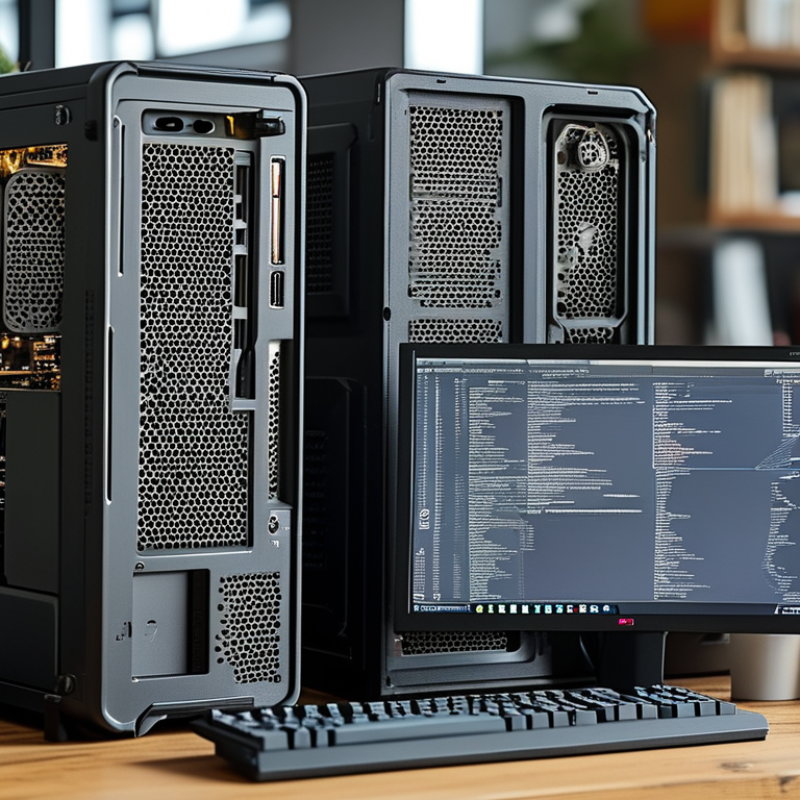
When considering "Server RAM vs desktop RAM," it's crucial to understand your specific needs. Server RAM typically excels in high-demand environments. A study by Crucial shows that servers maintain consistent performance during extended workloads. This reliability is essential for businesses running critical applications.
In contrast, desktop RAM is tailored for everyday tasks. Reports indicate that 80% of users do not require the robustness of server-grade memory. However, most desktop RAM lacks the error-correction features found in server RAM. Such features are vital for data integrity, particularly in enterprise settings.
It's essential to weigh both options carefully. While server RAM offers superior performance, it may also come with a higher price tag. Many users may find desktop RAM sufficient. Ultimately, the decision between server RAM and desktop RAM should reflect your budget and workload requirements.
Understanding Server RAM and Desktop RAM: Key Differences
When considering RAM for servers versus desktops, understanding their key differences is crucial. Server RAM typically prioritizes reliability and stability. It often incorporates error-correcting code (ECC). This feature helps detect and correct memory errors, preventing data corruption. On the other hand, desktop RAM is designed for consumer-level performance. It focuses on speed and cost-effectiveness, optimizing for gaming or typical daily tasks.
Capacity is another critical factor. Servers often require larger memory capacities to support multiple applications and processes. This capacity ensures efficient multitasking and resource allocation. Desktop systems usually have lower capacities, adequate for everyday needs. However, enthusiasts may seek high-performance RAM, potentially complicating choice.
The physical design also differs. Server RAM comes with specific form factors, compatible with server motherboards. Desktop RAM, like DIMMs, is designed for home setups. It's vital to assess your application's demands. Always consider reliability and performance needs for your purposes. This understanding will guide you toward the right choice.
Performance Metrics: How Server RAM Outperforms Desktop RAM
When considering server RAM versus desktop RAM, performance metrics play a vital role. Server RAM is engineered for efficiency. It handles extensive data transfers and multi-tasking better than desktop RAM. This capability is crucial for environments requiring high reliability and uptime. For instance, server RAM often features error-correcting code (ECC), reducing errors in data processing. This technology ensures critical applications run smoothly, making it an excellent choice for data centers.
Desktop RAM tends to focus on speed rather than error correction. While it may be faster in terms of clock speed, its real-world reliability pales in comparison. Without ECC, there is a greater chance of data corruption during intensive tasks. Additionally, server RAM typically has larger capacities. It can support higher memory loads, which is essential for virtual machines and large database applications.
Choosing RAM depends on your needs. If you are running complicated applications or manage servers, server RAM is a wise investment. In contrast, users with simpler tasks may find desktop RAM adequate. Reflecting on specific needs will lead to a more satisfying choice. Consider performance, reliability, and capacity before deciding.
Cost Analysis: Budgeting for Server RAM vs. Desktop RAM
When considering server RAM versus desktop RAM, cost plays a crucial role. Generally, server RAM is designed for higher performance and reliability. This means it costs more. However, the investment may be worth it for businesses requiring enhanced uptime and performance.
Desktop RAM, on the other hand, is typically more affordable. It suits home users and casual gamers. The price difference can be significant. For instance, desktop RAM can be less than half the cost of comparable server RAM. However, sacrificing quality may lead to issues later. Downtime isn’t just a pain; it affects productivity and revenue.
Thinking about long-term needs is essential. If you plan to run multiple applications or handle large datasets, server RAM might be better. But for everyday tasks, desktop RAM usually suffices. Ultimately, analyzing your workload will guide your choice. Investing in the right RAM can save costs over time, but it might take some reflection to find the best fit.
Server RAM vs Desktop RAM Cost Analysis
Use Cases: When to Choose Server RAM over Desktop RAM
When deciding between server RAM and desktop RAM, understanding your specific use case is crucial. Server RAM typically features ECC (Error-Correcting Code), which detects and corrects memory errors. This quality makes it a better choice for critical applications, such as database management or virtualization. Studies show that systems using ECC RAM can reduce downtime by up to 26%, significantly impacting business continuity.
In scenarios where performance and reliability are paramount, server RAM shines. For instance, organizations running complex simulations or data analytics can benefit from higher bandwidth and increased stability. Reports indicate that these environments often experience memory access speeds around 2400 MT/s or higher with server-grade options. This speed ensures that large datasets process efficiently without delays, which can be a downside when using standard desktop RAM.
However, not every situation justifies the cost of server RAM. For casual users or light workloads—like web browsing or document editing—desktop RAM suffices. It's crucial to weigh the performance needs against the budget. Transitioning to server RAM where it isn't needed can lead to overspending without noticeable benefits. Decisions should be rooted in clear understanding and assessment of actual requirements.
Future Trends: The Evolution of RAM in Servers and Desktops
The landscape of RAM technology is continuously evolving. Both servers and desktops have unique requirements. Server RAM prioritizes reliability and speed in a networked environment. In contrast, desktop RAM focuses on versatility and multitasking capabilities. Recent advancements show increased emphasis on energy efficiency. This is crucial for reducing operational costs in data centers.
Innovations in DDR5 technology are at the forefront of these changes. DDR5 offers faster data transfer rates and improved bandwidth. This enhances performance for both types of systems. Low latency and higher capacity modules are emerging trends. However, with the quick pace of evolution, users must consider future-proofing their systems. Will current technologies meet demands in the next few years?
Moreover, the rise of AI and machine learning applications urges a rethink of RAM requirements. More dynamic workloads need adaptive memory solutions. This raises questions about scalability and compatibility. Understanding these trends helps in making informed decisions. Selecting the right RAM is essential for optimizing performance, whether for servers or desktops.
FAQS
Desktop RAM aims for consumer-level performance. It focuses on speed and cost-effectiveness for gaming or daily tasks.
Servers often run multiple applications simultaneously. Larger memory capacities allow for efficient multitasking and resource allocation.
Users should reflect on their specific needs. Reliability, performance, and capacity are critical factors in this choice.
ECC helps detect and correct memory errors. This feature reduces the risk of data corruption in critical applications.
While desktop RAM is adequate for simpler tasks, enthusiasts may need high-performance options. The choice can complicate matters.
Server RAM is engineered for extensive data transfers and multitasking. It supports high reliability and uptime in critical environments.
Desktop RAM may be faster in speed, but without ECC, it risks more data corruption during intensive tasks.
Server RAM features specific form factors compatible with server motherboards. This differs from desktop RAM designed for home setups.
Balancing performance needs with reliability and capacity can be challenging. Enthusiasts may struggle to find the right fit.
Conclusion
When comparing Server RAM vs desktop RAM, it's essential to understand their key differences, especially regarding performance metrics and intended use cases. Server RAM is designed for high reliability, stability, and efficient handling of multiple tasks simultaneously, making it ideal for data centers and enterprise applications. In contrast, desktop RAM is optimized for consumer applications, offering sufficient speed and capacity for everyday computing tasks.
A cost analysis highlights that while Server RAM tends to be more expensive, its longevity and performance benefits can justify the investment for businesses. Understanding when to choose server RAM over desktop RAM is crucial for optimizing system performance. As technology evolves, trends suggest that RAM configurations will continue to advance, impacting both server and desktop environments in terms of efficiency and speed.
 Xeviora